
Hot water
Hot-Water Tank Leaking at the Base? What Needs Checking Before Replacement
A hot-water tank leaking at the base may have a failed cylinder, but water can also run down from a connection or nearby discharge pipe. The puddle alone does not prove the tank needs replacing. Keep clear of hot water and electrical fittings, and arrange an assessment to trace the source.
Key takeaways
- Water at the bottom can originate higher up the installation.
- A leaking connection and a leaking cylinder need different repairs.
- Constant discharge needs checking; never plug a relief pipe.
- Have the model, approximate age and a safe photo ready when booking.
Start with where the water comes from
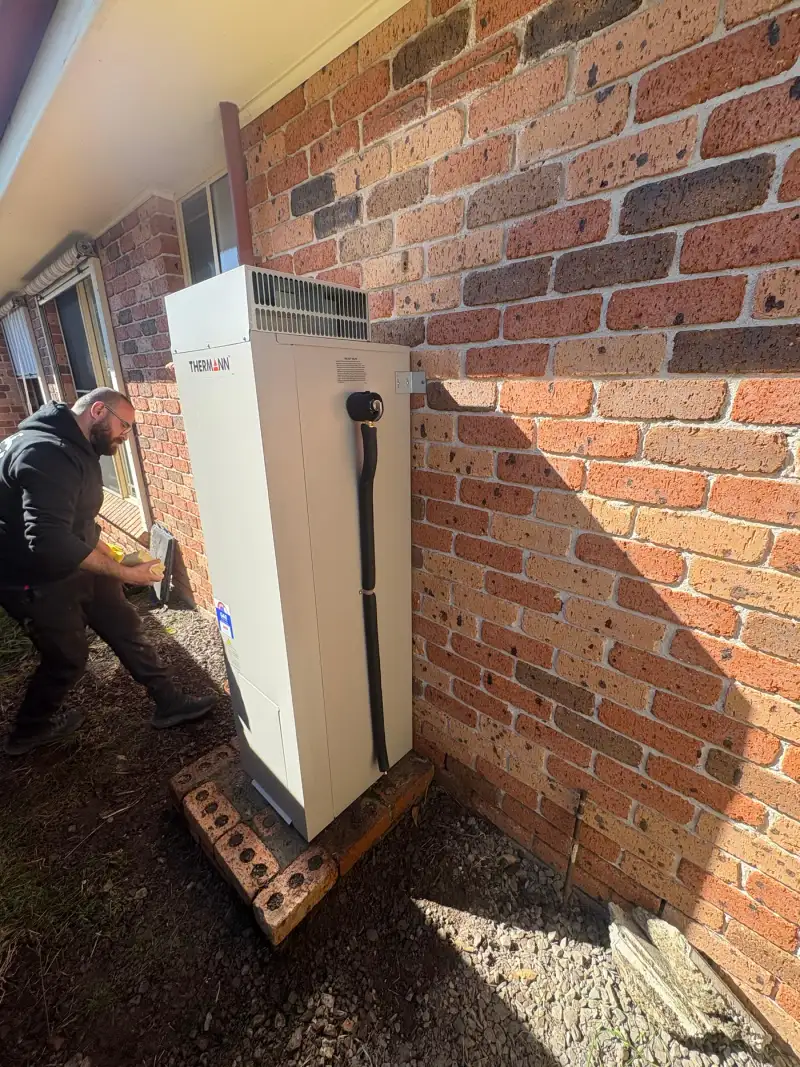
A wet concrete pad tells us where water collects, not necessarily where it escapes. A pipe joint above the cylinder can drip down its outside. Rain or a nearby drain can also leave water around the base. Describe whether the wet area appears during dry weather, after hot-water use or all the time.
Look only from a safe, dry position. Do not remove panels, reach beneath the heater or feel for hot drips. A photograph showing the whole installation can be more useful than a close-up of the puddle because it includes the surrounding pipes and ground.
Connection, relief discharge or cylinder?
A connection or valve may be the problem
The plumber needs to distinguish a leaking fitting from water escaping the storage vessel. An external component may be repairable without replacing the complete heater. The condition of the surrounding installation still matters, so a part-only quote should follow inspection rather than a guess over the phone.
Some discharge arrangements operate during heating, but continuous water loss deserves investigation. Sydney Water’s leak guidance advises checking for constant leakage from hot-water expansion valves. Never cap a discharge pipe or alter a safety valve to stop a drip.
A failed storage vessel changes the decision
If inspection confirms that the cylinder itself is leaking, replacement may be necessary. Ask the plumber to explain what establishes that finding. Rust marks or the unit’s age provide context, but neither should replace tracing the actual leak and assessing the equipment.
What to do before the visit
- Keep people away from hot water, slippery ground and wet electrical equipment.
- Call for advice about making your particular installation safe.
- Record the model and serial number only if the label is safely visible.
- Explain whether hot water is still available and whether the leak is getting worse.
Do not operate unfamiliar gas controls, disconnect wiring or try to drain the cylinder. If you cannot safely reach a clearly identified shut-off, leave it alone and tell the plumber. In a unit or rented home, contact the responsible manager as well so access and repair approval can be organised.
Compare a complete replacement scope
Our Carlingford hot-water service covers assessment and discussion of the appropriate repair or replacement. Ask about removal, connections, available space and any separate electrical work. A replacement should suit household demand, rather than simply copying the old tank size.
The Australian Government’s YourHome hot-water guide explains the different system options and the importance of usage patterns. Keep any warranty paperwork handy too: the installation date and service history can help clarify the available options without assuming cover applies.
Separate the leak repair from the replacement scope
Ask the assessment to distinguish a leaking connection, safety-valve discharge and a failed storage vessel. If replacement is justified, compare the complete installation: access, removal, connections, required controls and testing. Keep photos and the model details, but do not remove covers or approach water near electrical components to obtain them.
Quick check
Is the puddle enough to order a new tank?
No. Note when it appears and photograph the whole installation safely. Ask for the water source to be identified before approving replacement; do not open the heater to investigate.
Frequently asked questions
Can I keep using the hot water?
Ask the plumber for advice based on the leak and installation. A photo cannot rule out an electrical or scalding hazard, and continuing use may worsen water damage.
Does a repair mean replacing every valve?
Not automatically. Ask which components are faulty or need changing with the proposed work, and why. The quote should distinguish necessary work from optional improvements.
Could water at the base come from a nearby connection?
Yes. Water can travel down the casing from above. The wettest point is not necessarily the failed component.
How can relief-pipe water be distinguished from a tank leak?
Tell the plumber where water appears and when. Leave safety valves and discharge pipes untouched; they need assessment in context.
Should I block a dripping relief pipe?
No. Never cap or obstruct a safety-valve discharge. Arrange assessment of persistent or unusual discharge.
Is water near electrical connections urgent?
Keep clear and describe the hazard when seeking help. Do not touch wet controls, covers or wiring.
Can the tank casing be patched?
An external patch does not establish or safely repair the underlying fault. The leaking component must be identified first.
Will a replacement fit the same position?
Dimensions, clearances, connections, drainage and access all need checking. A similar capacity does not guarantee identical installation needs.
Should I photograph the rating plate?
Yes, if safely accessible. The model and serial details help identify the unit without removing covers.
What should a replacement quote separate?
Ask for the heater, required connection changes, removal, access work and completion checks to be clearly described.
Conclusion
Water at the base needs a source check before a replacement decision. Establish whether the leak is in the connected plumbing, discharge arrangement or cylinder, then compare a clear scope of work.
We’re The Carlingford Plumber, operated by Antons Plumbing & Gas. Our hot-water repairs and replacement in Carlingford can help you plan the next step. Tell us where the water collects and whether it is still leaking. Give us a call to arrange advice about the next step.